

Our Ambassadors
Each ambassador’s journey is unique. Some came to us as babies who never had the chance to learn the skills needed to survive in the wild, while others overcame injuries that made returning to their natural homes impossible. Although our goal is always release, a few animals simply cannot live on their own. When that happens, they take on a new and deeply meaningful role as ambassadors. Through them, we are able to connect people with wildlife in a personal and lasting way. These cherished animals remind us that every life has value. They are loved and cared for as part of our family, helping us share the beauty of wildlife, the importance of protecting it, and the wonder of the wild that still lives within us all. With their gentle presence and powerful stories, they inspire compassion, curiosity, and respect in everyone they meet.

TITAN
Great Horned Owl
Titan came to South Plains Wildlife Rehabilitation Center in 2010, She was found as an egg in the gymnasium at an elementary school in Big Springs, TX. After a game warden removed the eggs, they were brought to SPWRC and carefully hatched, Titan being the only survivor. As she grew, Titan faced developmental challenges including vocal development. Veterinarians determined she wouldn’t survive in the wild, and she found her new purpose as an educational ambassador. In 2013, she was chosen as the mascot for Jayne Ann Miller Elementary School, the only live mascot in Lubbock ISD, where she continues to teach students about wildlife and the importance of raptors in our environment. Now a striking four-pound owl, Titan inspires countless visitors and students alike.
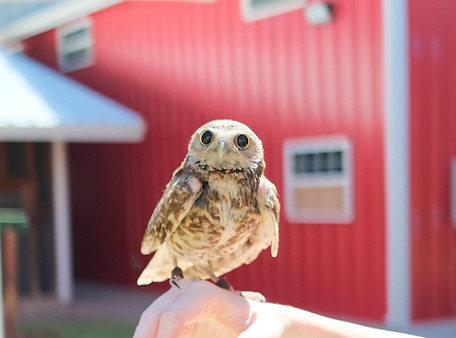
ODESSA
Burrowing Owl
Odessa came to SPWRC in 2025 after surviving a severe hailstorm in Odessa, Texas. She suffered a head injury that left her blind. The woman who found her cared for her for seven weeks in hopes of releasing her back into the wild, but an unbalanced diet during that time and lack of professional care including necessary treatments for her injury, Odessa was prevented the chance at regaining her eyesight. During those weeks, she also imprinted on humans. Both of these factors deemed her non-releasable.
Despite her challenges, Odessa has adapted remarkably well. She enjoys going on walks around the property and exploring new sounds and surroundings. She is fully auditory trained through tools like a "Clicker" and is a very confident little owl!
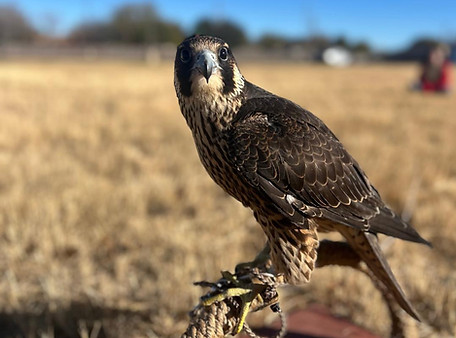
SCOUT
Peregrine Falcon
Scout arrived at SPWRC with a severely broken wing; the metacarpal bone in her left wing had fractured in three places. Although we were advised that euthanasia was the most humane option, we chose to give her a chance. After extensive treatment and rehabilitation, Scout regained the ability to fly and now actively participates in flight sessions with her handler.
Despite her progress, Scout still experiences the occasional drooping of the wing makes her vulnerable to other raptors. She also would not be able to survive the demands of migration. Today, Scout enjoys a safe, enriching life with us, spending her days flying with her handler and playing with her favorite enrichment toys.

DAKOTA
Swainson's Hawk
Dakota came to SPWRC as a juvenile in extremely poor condition, suffering from moderate head trauma and showing little will to live. It took weeks for her to relearn how to stand, perch, and eat on her own, and months before she could fly. These delays in reaching normal developmental milestones made it clear she would not be able to survive in the wild.
Now non‑releasable, She flies daily with her handler and regularly attends educational programs—something she genuinely seems to enjoy. Her resilience and gentle personality make her a favorite among visitors.

FROG
Swainson's Hawk
Frog arrived after being habituated to humans for multiple days by a well‑meaning individual. He also suffers from several severe genetic deformities, including a crooked jaw, bowed legs, and abnormal feather growth—conditions that should have prevented him from surviving at all.
Because he now associates humans with food and has deformities that would make it near impossible to survive on his own, he is non‑releasable. He spends his days contentedly chattering to himself in his mew and greeting his caretakers with the sweetest disposition. His gentle nature makes him a beloved member of our ambassador team.
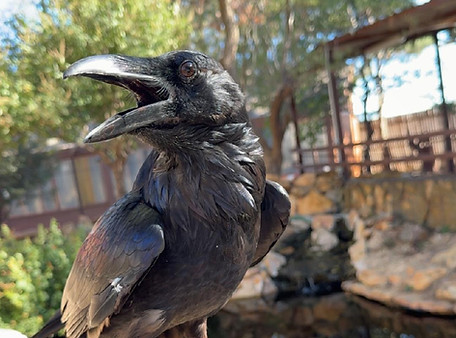
VINCENT
Common Raven
Vincent hatched near a home where the residents fed her for years, causing her to become fully dependent on humans for survival. When the homeowners moved away, she was left behind and unable to fend for herself. The new residents contacted SPWRC after noticing a raven who refused to leave their backyard.
Now a permanent resident, Vincent thrives with daily training sessions and enrichment activities alongside her favorite handler. Her story highlights the unintended harm caused by feeding wildlife and the importance of allowing wild animals to remain wild.

SIMON
Chihuahuan Raven
Simon was brought to SPWRC after being kept illegally in a wire dog crate for more than 15 years. The cramped conditions left his talons permanently deformed, and he never learned how to fly or withstand outdoor weather for extended periods. These long‑term effects made release impossible.
Today, Simon enjoys a peaceful life at the center, spending his days relaxing in the barn and interacting with staff. His story helps us educate the public about the importance of proper raptor care and the consequences of illegal captivity.
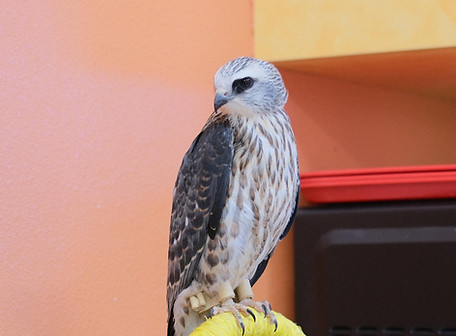
SAGE
Mississippi Kite
Sage came to the center in 2025 as a very tiny chick, still covered in down. At the time, she was the only Mississippi Kite in our care at her age, which meant she spent most of her early development alone, interacting only with her caretakers during feedings. Despite staff efforts to keep her wild—using masks, ghillie suits, and minimal handling—Sage unfortunately imprinted on humans and became fully habituated, making her non‑releasable. Sage now spends her days sunbathing and engaging in training sessions with her handler where she gets to fly.

TALLULAH
Spotted Ground Squirrel
Tallulah arrived at SPWRC as a baby in need of constant care. Young ground squirrels require near‑continuous companionship—either from their own species or from humans—to avoid stress, loneliness, and developmental issues. Because we rarely receive other ground squirrels in care, Tallulah relied heavily on human interaction during this critical period.
Although she cannot return to the wild, Tallulah now serves as a charming ambassador for her species. She helps us teach visitors about the unique needs of small mammals, the importance of proper wildlife rehabilitation, and why young animals should never be raised without appropriate species‑specific companionship.

NEMO
Milksnake
Nemo is a non‑native species who came to SPWRC after his former owner could no longer care for him. As a former pet, he is fully habituated to humans and cannot be released. Instead, Nemo has found a new purpose as an educational ambassador.
He frequently joins us at programs and community events, where he helps teach the public about the importance of snakes, their gentle nature, and the role they play in healthy ecosystems.

PHONEIX
Rat Snake
Phoenix is a native rat snake who originally lived with a Texas Tech University professor. He was used to teach students proper snake‑handling techniques for fieldwork and wildlife research. When the professor retired him from classroom use, Phoenix came to SPWRC to continue his educational career.
Now, he helps us teach the public about native snake species, their ecological importance, and how to safely coexist with them. Phoenix’s calm nature and long history of working with people make him a favorite among visitors.

CYPRESS
Ball Python
Cypress belongs to one of our board members but lives full‑time at the center, where he plays an active role in our educational programming. His calm temperament and predictable behavior make him an excellent teaching snake, especially for guests learning how to safely and respectfully handle reptiles.
Cypress attends many of our outreach events and helps visitors overcome fears, build confidence, and gain a deeper appreciation for snakes.
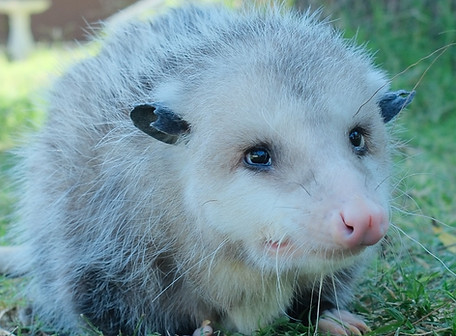
DOBBY
Virginia Opossum
Dobby arrived at SPWRC with a group of his siblings, but he was noticeably smaller and in far worse condition. He suffered from metabolic bone disease. With intensive care, proper diet, and time, Dobby made a full recovery yet still struggles in his hind legs, but quickly became one of the most charming animals in our care.
Although he cannot return to the wild, Dobby now serves as a gentle and engaging ambassador. His sweet personality and resilience help us teach visitors about the importance of proper wildlife nutrition and the challenges young opossums face.
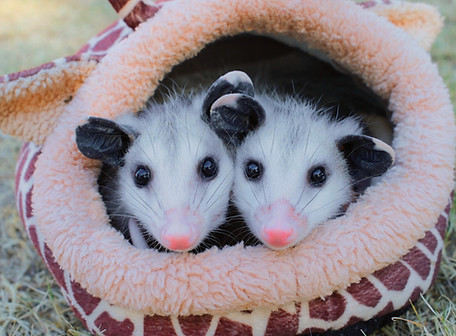
BUZZ & WOODY
Virginia Opossum
Buzz and Woody came to SPWRC after their mother was struck and killed by a car. Both joeys were found with neurological issues, likely caused by the trauma of the incident. Their symptoms made it difficult for them to stand, balance, and navigate normally, and despite rehabilitation, they were unable to reach the developmental milestones needed for release.
Today, Buzz and Woody live safely at the center, where they receive specialized care and enrichment. Their story helps us educate the public about the dangers wildlife face on roadways and the importance of seeking professional help when orphaned animals are found.